What Is Keto Meal Prep?
Keto meal prep combines two ideas: the ketogenic diet (very low carbohydrate, moderate protein, high fat) and weekly meal prepping (cooking in batches). Instead of deciding what to eat three times a day, you cook two or three recipes on a prep day and portion them into containers for the week.
The ketogenic diet typically reduces total carbohydrate intake to less than 50 grams a day — less than a medium plain bagel — with roughly 70–80% of calories from fat, 5–10% from carbohydrate, and 10–20% from protein, according to the Harvard T.H. Chan School of Public Health's review of the ketogenic diet. When carbs are that restricted, the body begins producing ketones from fat as an alternative fuel — a state called ketosis. Whether that state delivers the outcomes a person hopes for varies; Harvard notes that long-term evidence is limited and the diet has potential pitfalls, including nutrient deficiencies if variety is poor.
Meal prep matters more on keto than on most eating patterns, because the margin for error is small: one unplanned restaurant lunch can deliver a full day's worth of carbs. Having containers ready is what makes the approach sustainable in real life. For more general planning tactics, our breakfast meal prep guide covers batch routines that work for any diet.
Is Keto Meal Prep Right for You?
Keto meal prep may suit you if you enjoy structured routines, don't mind eating similar meals on repeat, and are comfortable skipping staples like bread, pasta, rice, and most fruit. It can be a practical fit for people who already cook in batches and want their default meals to be low-carb without daily decision fatigue.
It may not suit you if you dislike food restrictions, struggle with very limited variety, have a history of disordered eating, or manage conditions where a very high-fat diet could be risky. Harvard's review notes possible side effects of long-term ketogenic eating, including increased risk of kidney stones and gout, and nutrient gaps if the diet isn't varied.
An honest word before you start: keto is a significant dietary change, not a casual tweak. We recommend consulting a healthcare professional or registered dietitian before beginning, especially if you take medication for diabetes or blood pressure, are pregnant or breastfeeding, or have kidney, liver, or pancreatic conditions. And we make no promises here — this guide presents balanced information about how keto meal prep works, not guarantees of weight loss or health outcomes.
Keto Meal Prep for Beginners: Where Do You Start?
Beginners should start keto meal prep by learning the basics of carb counting, stocking a short list of staples, choosing two or three simple recipes, and cooking them all in one session. Don't try to master ketosis theory on day one — build the habit first, refine later.
- Learn the one number that matters. Most keto resources count "net carbs" — total carbohydrates minus fiber. A food label reading 8g carbs with 5g fiber counts as 3g net carbs. Note that net-carb math for sugar alcohols is debated, so treat packaged "keto" products with healthy skepticism.
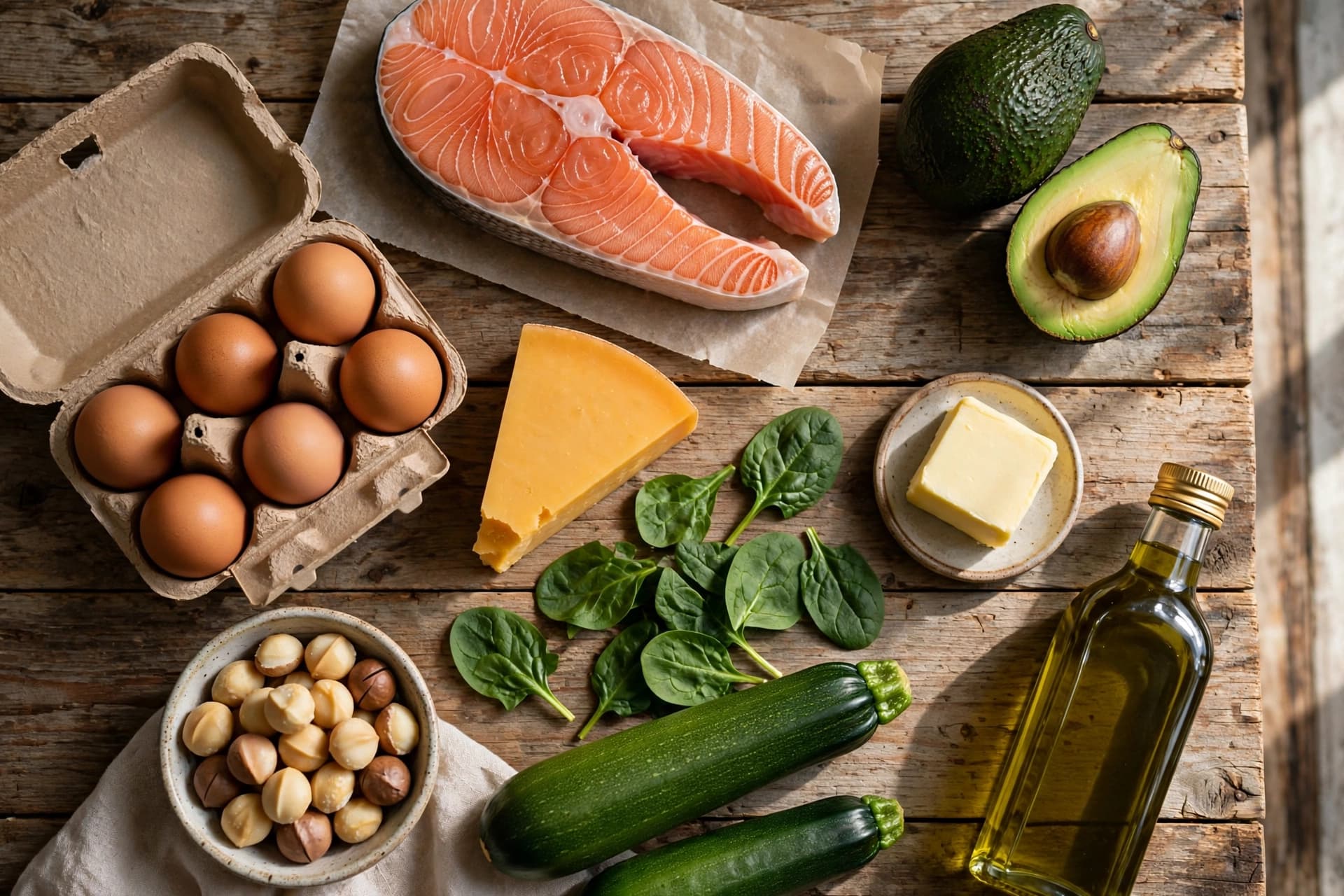
- Stock 10 staples. Eggs, butter, olive oil, chicken thighs, ground beef, canned tuna or salmon, frozen broccoli and cauliflower, cheddar or mozzarella, avocados, and almonds. That's a full week of meals right there.
- Pick two proteins and two vegetables. For your first prep week, cook chicken thighs and ground beef with two big trays of roasted broccoli and cauliflower. Mix and match across the week with different sauces and spices — the variety comes from seasoning, not from cooking seven different recipes.
- Schedule one 2-hour prep block. Sunday afternoon works for most people. Start the oven first (roast vegetables), then cook proteins on the stovetop while things roast, then portion into glass containers.
- Track loosely for the first two weeks. A simple notebook or app entry of roughly what you ate helps you see where hidden carbs sneak in (sauces, marinades, coffee drinks). Stop tracking if it becomes stressful.
What Are Some Easy Keto Meal Prep Ideas?
Easy keto meal prep ideas center on proteins that batch-cook well paired with low-carb vegetables and a fat source. Think egg muffins, chicken thighs with roasted broccoli, taco bowls over cauliflower rice, and salmon with asparagus — each reheats well and holds for days.
Breakfasts
- Egg muffins: beat a dozen eggs with spinach, cheddar, and cooked sausage; bake in a muffin tin. Grab two per morning.
- Chia pudding jars: chia seeds soaked overnight in unsweetened almond milk with a few raspberries.
- Breakfast casserole: one baking dish of eggs, bacon, and broccoli — slice into six portions.
Lunches and dinners
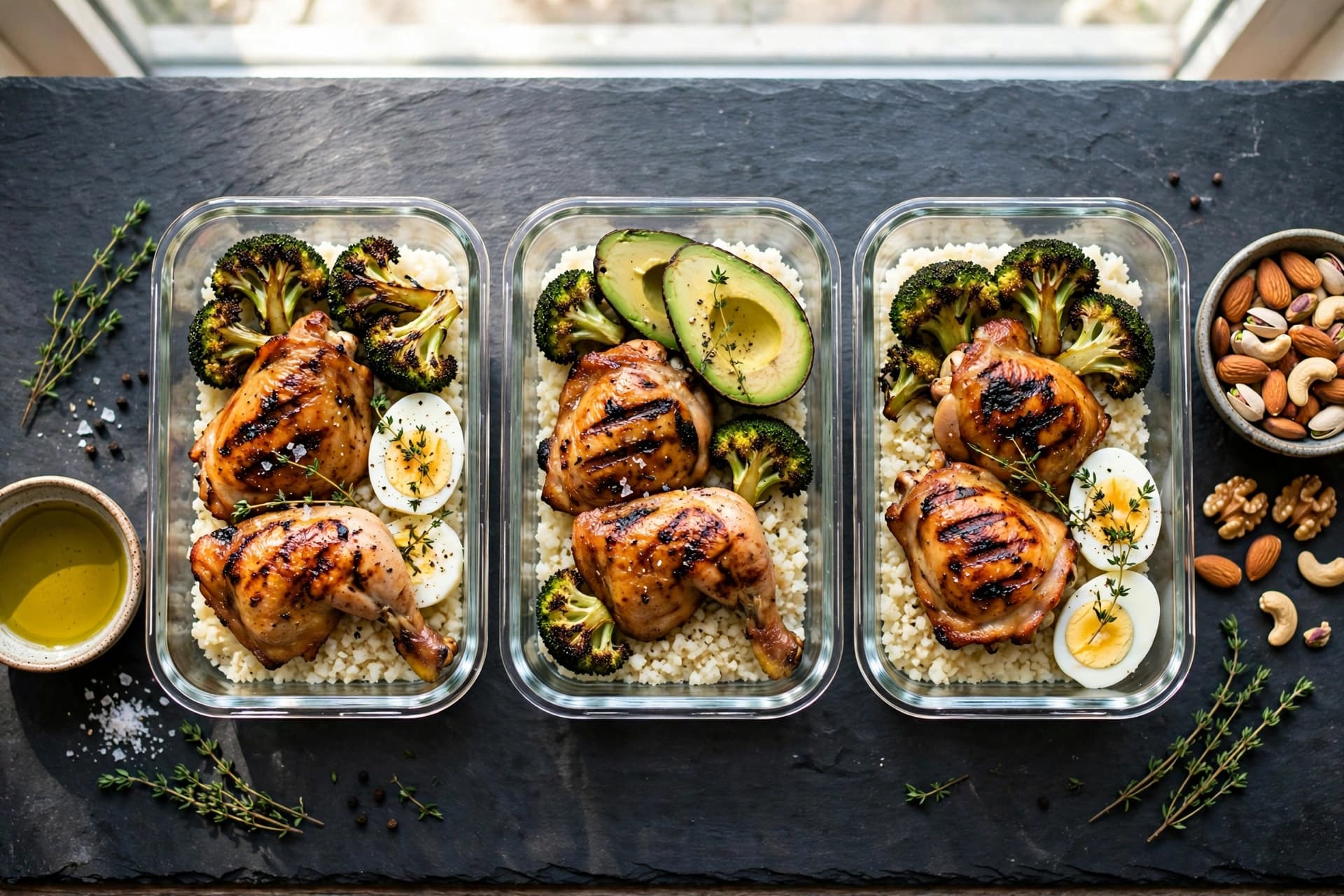
- Grilled chicken thighs + roasted broccoli + olive oil drizzle: the workhorse combo (shown in our hero photo).
- Taco bowls: seasoned ground beef over cauliflower rice with cheese, sour cream, and salsa.
- Salmon + asparagus: sheet-pan bake; add lemon butter after reheating.
- Bunless burger bowls: burger patties over shredded lettuce with pickles, cheese, and mustard.
- Chicken crust pizza: ground-chicken "crust" baked flat, topped with low-carb marinara and mozzarella.
Snacks
- Boiled eggs, cheese cubes, and macadamia or almond portions
- Celery sticks with cream cheese or guacamole
- Deli turkey rolled around pickles or cheese sticks
How Do You Do Keto Lunch Meal Prep That Stays Fresh?
Good keto lunch meal prep uses proteins and vegetables that reheat well, keeps wet and dry components separate until serving, and avoids ingredients that turn soggy or brown — like sliced avocado, which should be added fresh. Container strategy matters as much as the recipe.
- Choose thigh over breast. Dark meat stays juicier through a microwave reheat; chicken breast dries out by day three.
- Roast, don't steam. Roasted vegetables (broccoli, cauliflower, Brussels sprouts, zucchini) keep their texture far better than steamed ones.
- Sauce on the side. Pack dressings, salsa, sour cream, and guacamole in small separate containers so nothing gets soggy.
- Avocado at serving time. Half an avocado sliced onto a reheated bowl takes 30 seconds and transforms the meal.
- Use glass containers. They don't stain from turmeric or tomato sauces, reheat evenly, and last for years.
- The 4-lunch rotation. Prep four portions of two different lunches (8 total) and alternate — enough variety to avoid boredom, few enough recipes to stay sane.
Which Foods Fit Keto Meal Prep — and Which Don't?
Keto-friendly foods are generally those low in digestible carbs: meats, eggs, fish, non-starchy vegetables, nuts and seeds, and healthy fats. Grains, sugars, starchy vegetables, and most fruit are out. This table is a practical starting list, not an exhaustive rulebook.
| Eat freely (meal-prep staples) | Avoid or strictly limit |
|---|---|
| Eggs (boiled, muffins, casseroles) | Bread, pasta, rice, tortillas, cereal |
| Chicken thighs, turkey, beef, pork, bacon | Potatoes, corn, peas, winter squash |
| Salmon, tuna, shrimp, sardines | Beans, lentils, chickpeas |
| Broccoli, cauliflower, zucchini, spinach, asparagus | Most fruit (bananas, apples, grapes, mango) |
| Avocados, olives, olive oil, coconut oil, butter | Fruit juice, soda, sweetened coffee drinks |
| Cheese, heavy cream, sour cream, Greek yogurt (plain, full-fat) | Milk, sweetened yogurt, ice cream |
| Almonds, macadamias, walnuts, chia and flax seeds | Honey, maple syrup, agave, table sugar |
| Berries in small portions (raspberries, blackberries) | Beer, sweet cocktails, sugary mixers |
Gray areas exist: carrots and onions contain more carbs than leafy greens but work in small amounts; tomatoes and bell peppers are fine in moderation. When in doubt, check the label and count the net carbs against your daily target.
What Does a Week of Keto Meal Prep Look Like?
A sample keto meal prep week repeats two or three batch-cooked recipes across days, with sauces and sides rotated for variety. Below is a realistic starter week built from the recipes above — three cooking sessions (Sunday, Wednesday refresh) keep everything fresh.
| Day | Breakfast | Lunch | Dinner |
|---|---|---|---|
| Mon | Egg muffins (2) | Chicken thighs + roasted broccoli | Taco bowls over cauliflower rice |
| Tue | Chia pudding + raspberries | Taco bowls over cauliflower rice | Salmon + asparagus |
| Wed | Egg muffins (2) | Salmon + asparagus | Bunless burger bowls |
| Thu | Breakfast casserole slice | Bunless burger bowls | Chicken thighs + roasted cauliflower |
| Fri | Chia pudding + raspberries | Chicken thighs + roasted cauliflower | Taco bowls over cauliflower rice |
| Sat | Egg muffins (2) | Leftovers / chef's choice | Salmon + zucchini |
| Sun | Breakfast casserole slice | Leftovers / chef's choice | Prep session for next week |
Snacks between meals (cheese, nuts, boiled eggs) fill gaps on hungrier days. Notice the pattern: no day requires cooking from scratch. That is the entire point — and the same "cook once, eat all week" logic powers our 1800 calorie meal plan guide for a non-keto audience.
What Mistakes Should Beginners Avoid?
The most common keto meal prep mistakes are undereating fat, ignoring electrolytes, and prepping food that doesn't reheat well. Fixing these three removes most of the friction beginners feel in the first month.
- Eating "low-carb" but not "high-fat." Keto without enough fat is just a restrictive diet that leaves you hungry. Drizzle olive oil generously, cook with butter, and add avocado — fat is the fuel here.
- Forgetting electrolytes. Lower insulin levels make the kidneys excrete more sodium, which contributes to early-week fatigue and headaches. Salting food adequately and drinking enough water helps; persistent symptoms warrant a clinician's input.
- Prepping the wrong textures. Crispy bacon goes limp, fried eggs turn rubbery, and salads wilt. Prep the sturdy components and add the delicate ones fresh.
- Overcomplicating week one. Three recipes beat seven. Master the template meals before attempting keto bread or fathead pizza.
- Ignoring fiber. Without grains and fruit, fiber drops fast. Leafy greens, chia seeds, flax, and avocados keep things moving.
- Treating "keto" labels as magic. Packaged keto bars and snacks can be convenient, but some use sugar alcohols or fibers that affect people differently. Whole foods first, products second.
Important: keto is a significant dietary change. If you have a medical condition, take prescription medication, or are unsure whether very-low-carb eating is appropriate for you, please consult a healthcare professional before starting — and revisit that conversation if anything feels off.
Frequently Asked Questions
How many carbs can I eat on keto?
Most keto approaches limit total carbohydrates to under 50 grams per day, and some go as low as 20 grams. There is no single official standard, so ranges vary by source. If you are unsure what target fits you, talk with a healthcare professional or registered dietitian first.
Can beginners do keto meal prep?
Yes — keto meal prep for beginners is often easier than daily keto cooking, because one focused cooking session removes most of the day's decision-making. Start with simple template meals (a protein, a low-carb vegetable, and a fat source) before trying complex recipes.
What are easy keto meal prep ideas for lunch?
Keto lunch meal prep that reheats well includes grilled chicken thighs with roasted broccoli, bunless burger bowls, egg muffins with spinach and cheese, and taco-seasoned ground beef over cauliflower rice. Keep dressings and avocado separate until serving.
How long does keto meal prep last in the fridge?
Most cooked keto meals keep for 3–4 days in airtight containers in the refrigerator. Cooked proteins like chicken and ground beef are good candidates for freezing, where they can last 2–3 months. When in doubt, follow standard food safety guidance.
Do I need special products to start keto meal prep?
No. Whole foods — eggs, meat, fish, low-carb vegetables, nuts, seeds, olive oil, butter, and cheese — cover the bases. Specialty keto products are optional, not required, and many contain ingredients worth checking if you track net carbs.
Is keto safe?
Keto is a significant dietary change and is not appropriate for everyone — for example, people with certain kidney, liver, or pancreatic conditions, pregnant people, and those on glucose-lowering medication should be especially cautious. Talk with your own healthcare professional before starting, and stop if you experience concerning symptoms.
Why do I feel tired in the first week of keto?
Many people notice fatigue, headaches, or irritability in the first days of very-low-carb eating, often called the 'keto flu.' It is usually temporary, but if symptoms are severe or persist, check with a healthcare professional rather than pushing through.
A Final, Honest Note
Keto meal prep works best when it's boring: the same reliable containers, the same handful of recipes, the same Sunday routine. You don't need exotic ingredients or expensive products — just a plan, a grocery list, and food that reheats well. And if you try keto and find the restrictions make you miserable, that is useful information, not failure. Plenty of people do better with a moderate approach, like the balanced day in our 1800 calorie meal plan. The best diet is the one you can actually live with — and the best meal plan is the one that gets cooked.
Plan Your Keto Week Without the Guesswork
Mealence builds you a personalized weekly meal plan — pick your preferences, get a full week of recipes, and stop deciding what to eat every night.
New here? Browse all Mealence blog articles or start with our high-protein meal prep guide for a non-keto batch-cooking system.