Meal prep guides
High Protein Meal Prep: The Complete Guide
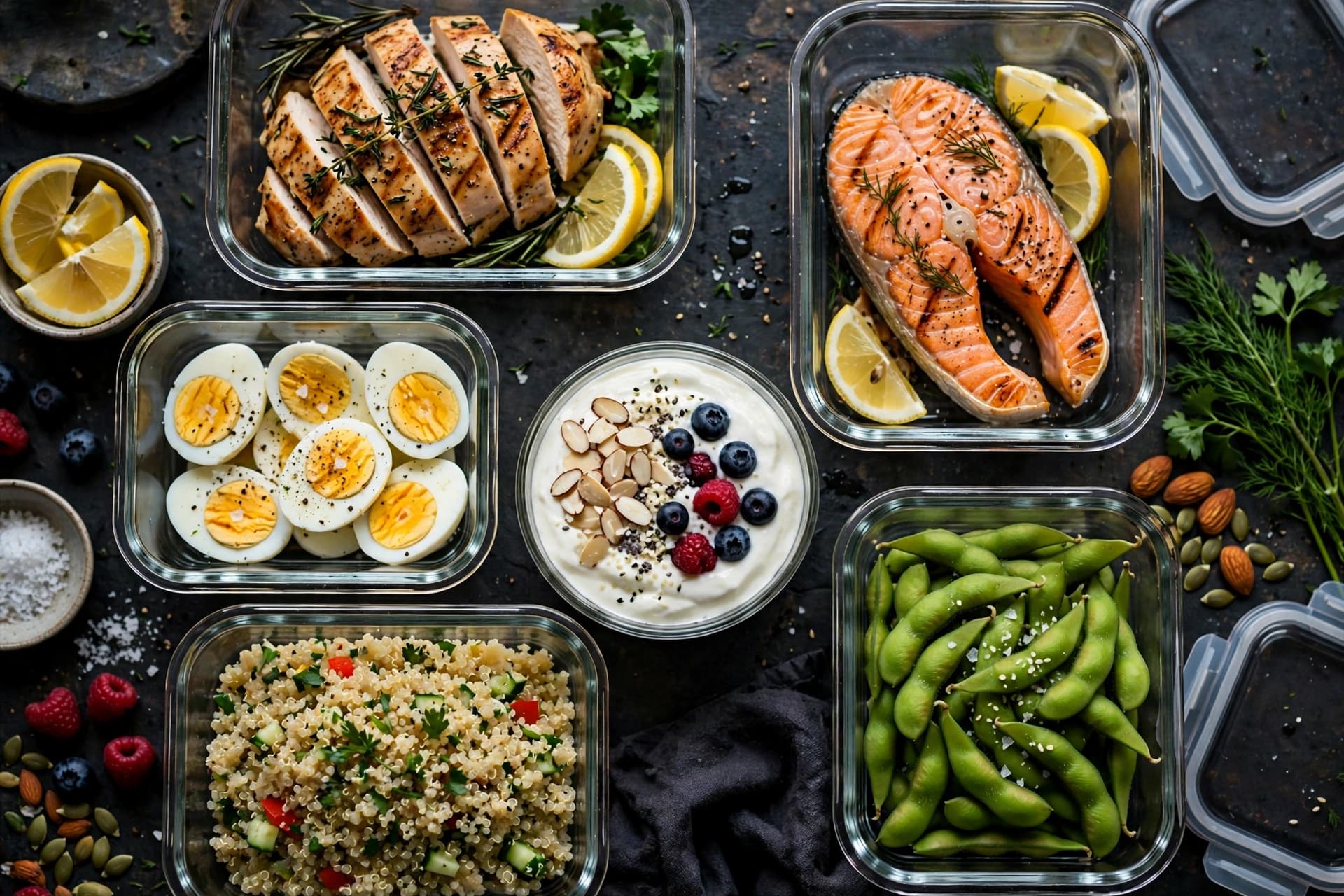
High protein meal prep means cooking protein-rich meals in batches so every lunch and dinner already hits your protein target. Done well, it removes the daily guesswork: grill once, portion into containers, and eat well all week without thinking about macros at every meal.
TL;DR — Key takeaways
- High protein meal prep is batch-cooking protein-forward meals so hitting your protein target becomes automatic instead of a daily negotiation.
- Aim for roughly 25–40g of protein per main meal; chicken, Greek yogurt, eggs, salmon, lentils, and cottage cheese are the most prep-friendly sources.
- The cheapest high protein meal prep leans on eggs, lentils, chicken thighs, canned tuna, and bulk Greek yogurt.
- Cooked meat keeps 3–4 days refrigerated; freeze anything you will not eat within that window.
- Reheating does not destroy protein — gentle reheating with a splash of liquid keeps prepped meat juicy.
What is high protein meal prep?
High protein meal prep is the practice of cooking protein-rich meals ahead of time — usually once or twice a week — so every serving delivers a solid dose of protein without daily cooking. Instead of deciding at noon what has “enough protein,” you open the fridge and the decision is already made.
There are two main styles. Full-meal prep portions complete meals into containers: chicken, rice, and vegetables, ready to reheat. Component prep cooks building blocks — a tray of chicken breasts, a pot of quinoa, roasted vegetables, a batch of hard-boiled eggs — that you mix and match through the week. Component prep stays interesting longer and wastes less, because nothing is locked into a combination you're tired of by Thursday.
Protein deserves the spotlight because it is the macro people most often under-eat when life gets busy. Carbohydrates and fats show up almost automatically; protein takes intention. Prepping it ahead turns intention into a fridge full of default choices.
How much protein should your meal prep include?
Protein needs vary with body size, age, activity level, and goals, so there is no single number for everyone. A widely used starting point for active adults is about 25–40 grams of protein per main meal, spread across three to four meals a day. If you train hard, are older, or are dieting, your needs may be higher — a registered dietitian can personalize the target.
The Harvard T.H. Chan School of Public Health's Nutrition Source offers a solid overview of protein's role in the diet and notes that most people benefit from getting protein from varied sources — legumes, nuts, fish, poultry, dairy, and eggs — rather than a single food on repeat.
This article is for informational purposes and is not medical advice. Protein needs differ by individual — consult a qualified professional for personalized guidance, especially if you have kidney disease, are pregnant, or manage a chronic condition.
What are the best high protein foods for meal prep?
The best high protein meal prep foods share three traits: a lot of protein per serving, good texture after reheating, and a price you can sustain weekly. Chicken breast, Greek yogurt, eggs, salmon, lentils, and cottage cheese check all three boxes, which is why they anchor most prep routines.
| Food | Protein (approx.) | Why it preps well |
|---|---|---|
| Chicken breast | ~31g per 100g cooked | Reheats well; shreds for bowls, wraps, and salads |
| Salmon fillet | ~25g per 100g cooked | Rich in omega-3s; good cold over salads for 3 days |
| Greek yogurt (plain) | ~10g per 100g | No cooking; base for breakfasts, sauces, and snacks |
| Eggs | ~6g per egg | Hard-boil a dozen; also bake into egg muffins |
| Cottage cheese | ~11g per 100g | Ready to eat; works sweet or savory |
| Canned tuna | ~26g per 100g drained | Shelf-stable; instant high-protein lunches |
| Lentils (cooked) | ~9g per 100g | Cheapest protein per dollar; great in soups and bowls |
| Edamame (shelled) | ~11g per 100g | Freezer staple; thaws in minutes for bowls and snacks |
| Tofu (firm) | ~8g per 100g | Press, cube, and bake; crisps up and holds for days |
Rotate two or three proteins per week rather than eating chicken every single day. Variety covers more micronutrients, keeps meals interesting, and protects you from “prep fatigue” — the reason most people quit meal prepping by week three.
What does a week of high protein meal prep look like?
A practical week mixes batch-cooked dinners with assembly-style lunches and grab-and-go breakfasts. The plan below targets roughly 30+ grams of protein per meal using the foods from the table above — adjust portions to your own targets.
| Day | Breakfast | Lunch | Dinner |
|---|---|---|---|
| Mon | Greek yogurt + berries + granola | Chicken quinoa bowl | Salmon, roasted broccoli, sweet potato |
| Tue | Egg muffins (3) + fruit | Turkey chili (batch) | Chicken stir-fry with edamame + rice |
| Wed | Overnight oats + Greek yogurt | Tuna white-bean salad wraps | Turkey chili (leftovers) |
| Thu | Cottage cheese + pineapple + nuts | Lentil soup (batch) + bread | Baked tofu bowls with peanut sauce |
| Fri | Greek yogurt + berries + granola | Chicken quinoa bowl | Salmon, asparagus, quinoa |
| Sat | Veggie omelet (3 eggs) + toast | Lentil soup (leftovers) | Flexible night — eat out or use freezer stash |
| Sun | Egg muffins (3) + fruit | Tuna white-bean salad wraps | Prep night: cook the week's proteins |
Notice the repeats: two batch recipes (turkey chili, lentil soup) each cover two meals, and Sunday's cook session produces the chicken, quinoa, eggs, and salmon that fill the rest. That is the whole trick — cook five things, eat fifteen meals. If you want planning help, Mealence's 300-recipe collection includes high-protein filters that make building a week like this much faster.
What are the best high protein breakfast meal prep ideas?
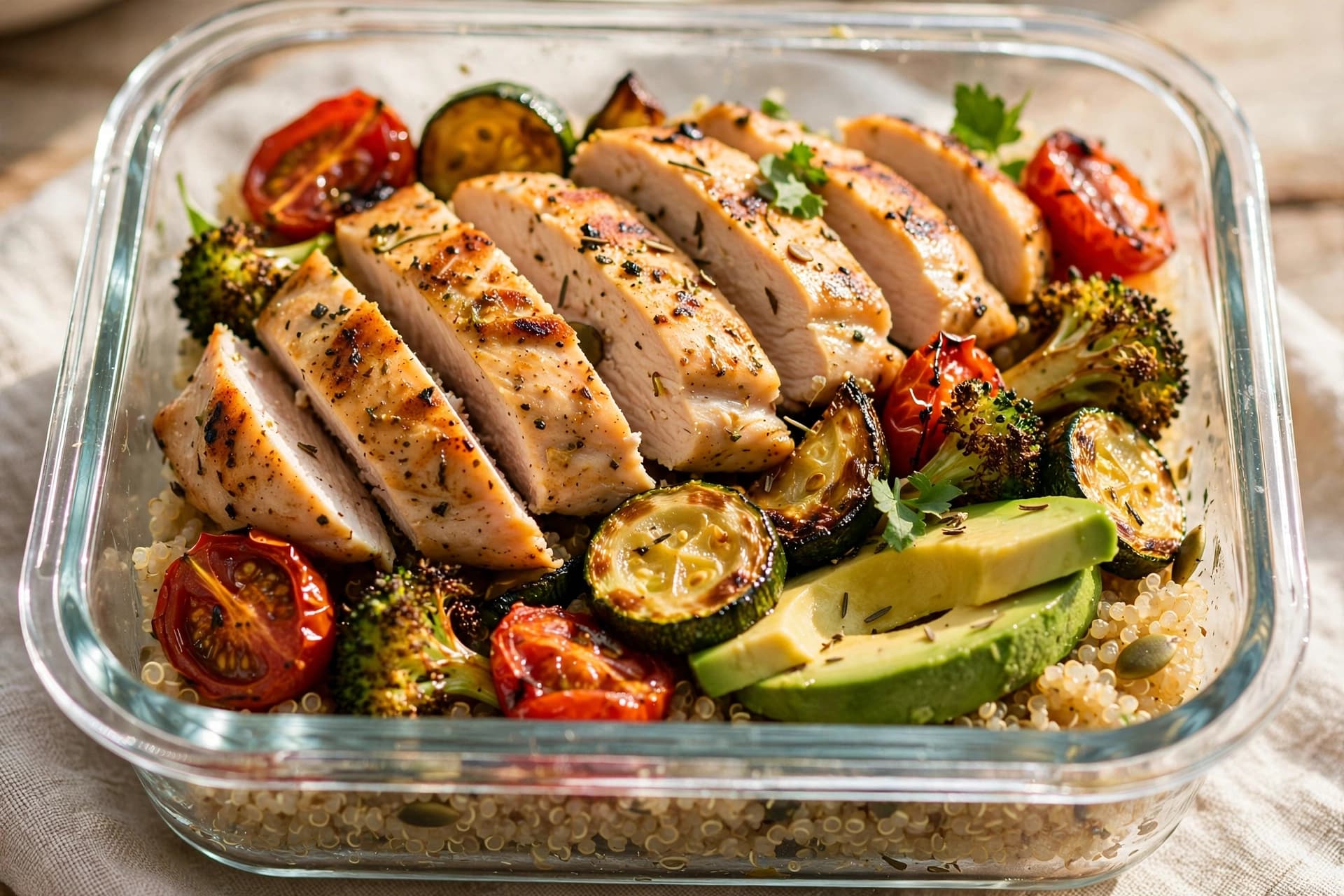
High protein breakfast meal prep solves the morning rush: make a batch on Sunday and grab breakfast all week. Overnight oats with Greek yogurt, baked egg muffins, and cottage cheese bowls each deliver 20–30 grams of protein with almost no morning effort.
- Overnight oats + Greek yogurt (~25g). Combine oats, Greek yogurt, milk, and chia seeds in jars; top with berries. Keeps 4–5 days refrigerated.
- Baked egg muffins (~18g for 3). Whisk a dozen eggs with chopped vegetables, cheese, and cooked sausage or turkey; bake in a muffin tin. Reheat 60–90 seconds.
- Cottage cheese power bowl (~24g). Portion cottage cheese into containers; add fruit and nuts each morning so nothing gets soggy.
- Protein pancakes (~22g for 3). Make a big batch with blended oats, eggs, and Greek yogurt; freeze with parchment between them and toast from frozen.
For the full morning playbook — including storage times and a 5-day plan — see our breakfast meal prep guide for busy mornings.
What are the best high protein lunch meal prep ideas?
The best high protein lunch meal prep follows a formula: a cooked protein, a grain or starch, vegetables, and a sauce or healthy fat. Bowls built this way stay satisfying for hours, reheat in minutes, and never feel like sad desk food.
- Chicken quinoa power bowl (~38g). Sliced chicken breast, quinoa, roasted sweet potato and broccoli, tahini-lemon drizzle.
- Turkey chili (~32g). Ground turkey, black beans, tomatoes, and peppers in one pot. Improves overnight; freezes beautifully.
- Tuna and white bean salad (~34g). No cooking required — tuna, cannellini beans, red onion, olive oil, lemon. Holds 3–4 days.
- Salmon poke-style bowl (~33g). Baked salmon over rice with edamame, cucumber, and a light soy-sesame dressing. Best eaten within 3 days.
- Lentil and egg bowl (~24g). Red lentil soup topped with a jammy 7-minute egg and a swirl of yogurt — the budget champion.
Pack sauces and dressings separately and add them after reheating. It takes ten extra seconds and is the difference between a good reheated lunch and a great one.
How can you do cheap high protein meal prep?
Cheap high protein meal prep is absolutely possible — protein is one of the more affordable macros when you buy the right foods. The strategy is simple: build the week around inexpensive staples, buy the priciest items (like fresh fish) only when they fit the budget, and let batch cooking do the rest.
- Anchor on eggs and legumes. A dozen eggs and a bag of dried lentils cost little and cover multiple high-protein meals. Dried beans are even cheaper than canned if you plan ahead.
- Choose thighs over breasts. Chicken thighs cost notably less than breasts, stay juicier after reheating, and carry nearly as much protein per serving.
- Buy dairy in bulk. Large tubs of plain Greek yogurt and cottage cheese cost far less per gram of protein than single-serve cups.
- Keep canned tuna and frozen edamame on hand. Both are shelf- or freezer-stable, so they fill gaps without a special grocery trip.
- Freeze half of every batch. Doubling cheap recipes and freezing half means future weeks start with free high-protein meals.
How do you store high protein meal prep safely?
Cooked meat, poultry, and fish keep 3–4 days in the refrigerator; cooked grains and beans keep 4–5 days; hard-boiled eggs keep up to a week. Cool food within two hours of cooking, refrigerate in shallow containers, and freeze anything you will not eat within the safe window.
- Refrigerate promptly. Get cooked food into the fridge within two hours — one hour if your kitchen is very warm.
- Use airtight glass containers. They keep food fresher, reheat evenly, and let you see what is inside.
- Label with the date. A piece of tape and a marker ends the “is this still good?” debate.
- Reheat to steaming throughout. Bring leftovers to 165°F (74°C) — steaming hot all the way through, not just warm on the edges.
- When in doubt, throw it out. Off smells, slimy texture, or uncertainty after day four means it is not worth the risk.
For official time-and-temperature guidance, FoodSafety.gov publishes clear charts on how long cooked foods keep refrigerated and frozen.
Which meal prep cooking method is best?
No single method wins — the best one is the one that fits your Sunday. Sheet pans handle proteins and vegetables together with almost no cleanup, slow cookers turn cheap cuts tender while you do other things, and stovetop batching is fastest for grains and soups. Most experienced preppers combine two.
| Method | Best for | Hands-on time | Downside |
|---|---|---|---|
| Sheet pan | Chicken, salmon, tofu + vegetables together | Low (15 min prep) | Limited volume per batch |
| Slow cooker | Pulled chicken, turkey chili, stews | Minimal (10 min prep) | Long cook time; plan ahead |
| Stovetop batch | Grains, lentils, soups, egg muffins (oven) | Medium (30–45 min) | Ties up the kitchen |
| Grill | Large batches of chicken or fish | Medium (30 min) | Weather-dependent; needs attention |
A strong default session: sheet-pan chicken and vegetables in the oven while a pot of quinoa simmers on the stove and eggs boil in another pot. Three burners, one hour, most of the week handled.
High protein meal prep FAQs
How many grams of protein should each meal prep meal have?
A common target is 25–40 grams of protein per main meal, which suits most active adults spreading protein across three to four meals a day. Your ideal number depends on body size, age, activity, and goals — a dietitian can personalize it.
What is the cheapest high protein meal prep?
Eggs, dried lentils and beans, chicken thighs, canned tuna, cottage cheese, and plain Greek yogurt in large tubs give you the most protein per dollar. Buying these staples in bulk and cooking them in batches keeps costs low.
How long does high protein meal prep last in the fridge?
Cooked meat, poultry, and fish keep 3–4 days refrigerated; hard-boiled eggs keep up to a week; cooked grains and beans keep 4–5 days. When in doubt, freeze portions on day one and thaw them as needed.
Can I do high protein meal prep as a vegetarian?
Yes. Lentils, chickpeas, black beans, tofu, tempeh, edamame, Greek yogurt, cottage cheese, and eggs all prep well. Combining legumes with grains across the day covers the amino acids your body needs.
Does reheating destroy protein?
No. Normal reheating does not meaningfully reduce protein content. Overcooking can make meat tough and dry, which is why gentle reheating — with a splash of water or broth — keeps prepped protein tasting good.
Should I track protein when meal prepping?
Tracking for a week or two can teach you what 30 grams of protein actually looks like on a plate. After that, most people do fine with a simple formula: a palm-and-a-half of protein plus produce and a grain or starch at each meal.
Is high protein meal prep good for weight loss?
Protein-rich meals tend to keep people fuller for longer, which can make a calorie deficit easier to sustain. But weight loss depends on overall intake and lifestyle — meal prep is a tool that makes consistent eating easier, not a guarantee.
Start with one protein, one grain, one session
You do not need a perfect macro spreadsheet to start high protein meal prep — you need one batch-cooked protein and one grain in the fridge by Sunday night. Add a second protein the next week, a sauce the week after, and let the system grow. Within a month, hitting your protein target will feel less like a daily project and more like opening the fridge.
For more planning help, browse the Mealence blog — including our family meal plans guide for busy households. This article is for informational purposes and is not medical advice. Consult a qualified professional for personalized guidance.
Hit your protein goals without the daily math
Mealence builds personalized weekly meal plans around your diet, goals, and allergies — including high-protein preferences. Create your free account and set your preferences today.
Try Mealence's personalized weekly meal planner