What Does an 1800 Calorie Meal Plan Look Like?
An 1800 calorie meal plan typically looks like this: a protein-rich breakfast around 400–500 calories, a substantial lunch around 500 calories, a balanced dinner around 500–600 calories, and one or two snacks filling the remainder. The emphasis is on whole foods — lean proteins, whole grains, vegetables, fruit, and healthy fats — rather than on restriction theater.
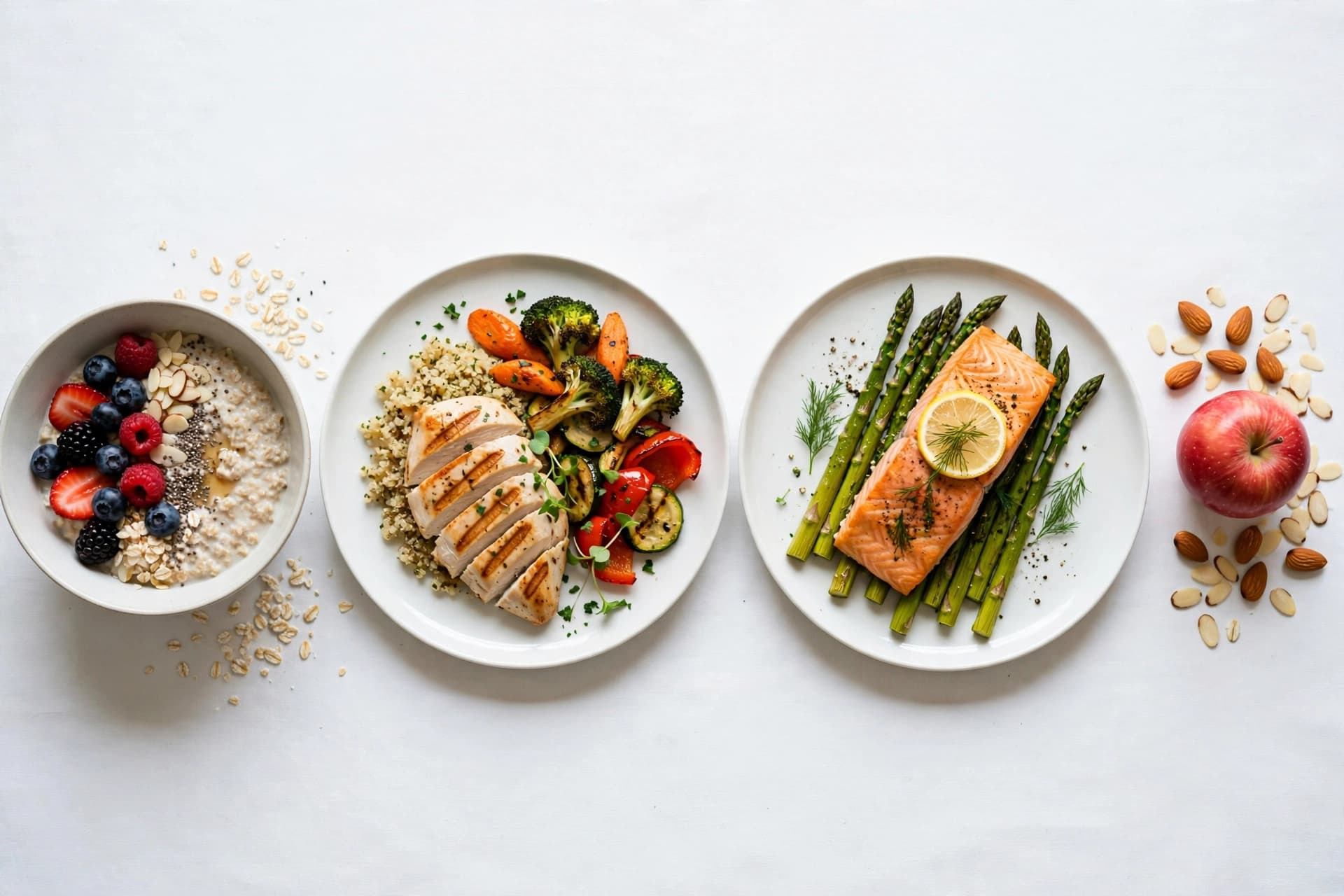
For a sense of scale, 1,800 calories can comfortably include foods like oatmeal with berries, a grilled chicken and quinoa bowl, baked salmon with sweet potato, plus snacks like Greek yogurt or an apple with almonds. Nothing here requires exotic ingredients or tiny portions; the calorie budget works because each meal is built on protein and fiber, which are the two nutrients most associated with feeling full.
One useful framing comes from Harvard's Healthy Eating Plate: fill half the plate with vegetables and fruit, a quarter with whole grains, and a quarter with protein, with healthy oils on the side. Apply that plate to each meal in this plan and the 1,800-calorie target largely takes care of itself. Our keto meal prep guide takes a different approach to the same "plan once, eat well all week" idea.
Who Might an 1800 Calorie Diet Plan Suit?
An 1800 calorie diet plan often fits moderately active adults of average size — for example, many women aiming for gradual weight loss, or smaller, less active adults maintaining their weight. The 2020–2025 Dietary Guidelines for Americans estimate that adult women generally need roughly 1,600–2,400 calories daily and adult men roughly 2,000–3,000, depending on age and activity level. 1,800 sits comfortably inside that landscape for many people — and outside it for others.
It may not suit you if you are very active, pregnant or breastfeeding, under 18, have a history of disordered eating, or manage a condition where calorie restriction could be harmful. Athletes, teenagers, and people recovering from illness typically need more. When in doubt, the honest answer is to ask a professional rather than guess.
Please read this before using the sample day below: this article is general information, not medical advice and not a prescription. Calorie and nutrient needs vary by age, sex, height, weight, activity level, health conditions, and goals. All macro numbers shown are estimates and examples only. We recommend consulting a registered dietitian before making significant dietary changes — they can calculate your actual needs in a single session.
What Does a Sample 1800 Calorie Day Look Like?
A sample high-protein 1800 calorie day puts protein at every meal, pairs it with fiber from whole grains and vegetables, and leaves room for snacks. The table below shows one full day with estimated calories and macros — remember, these are estimates for illustration, not precise measurements; actual values vary with brands, portions, and preparation.
| Meal | What to eat | Est. calories | Est. protein |
|---|---|---|---|
| Breakfast | 1 cup Greek yogurt (2%) + ¾ cup mixed berries + ¼ cup granola + 1 tbsp chia seeds | ~450 | ~32g |
| Lunch | Grilled chicken breast (5 oz) + 1 cup cooked quinoa + roasted broccoli, carrots & zucchini + 1 tsp olive oil | ~520 | ~45g |
| Snack | 1 medium apple + 1 small handful almonds (about 20) | ~280 | ~8g |
| Dinner | Baked salmon (5 oz) + 1 medium sweet potato + steamed asparagus + side salad with vinaigrette | ~550 | ~38g |
| Day total | Carbs ≈ 200g · Fat ≈ 55g (estimates) | ~1,800 | ~123g |
Notice the structure more than the specifics: each meal anchors on protein, includes a fiber source, and adds vegetables. Swap freely within that template — turkey for chicken, lentils for salmon, brown rice for quinoa — and the day still works. If you want this kind of structure without doing the math yourself, that's exactly what a weekly meal planner is for.
Can You Use an 1800 Calorie Meal Plan for Weight Loss?
An 1800 calorie meal plan can support weight loss only if 1,800 calories is below your personal maintenance level — the amount your body burns in a day. Weight change comes from sustained energy balance, not from any particular calorie number. Someone whose maintenance is 2,300 calories would be in a ~500/day deficit on this plan; someone whose maintenance is 1,800 would simply maintain.
As a rough rule of thumb, a daily deficit of about 500 calories is commonly associated with roughly a pound of weight loss per week — but that is an average, not a promise. Metabolism, water retention, sleep, stress, and consistency all move the needle, and plateaus are normal. Anyone promising you a specific result from a specific calorie number is selling something.
If weight loss is your goal, the most sustainable approach is a modest deficit you can live with for months, built on foods you actually enjoy — paired with movement you don't dread and sleep you protect. Crash deficits tend to backfire through hunger, fatigue, and rebound eating. A registered dietitian can help you set a target that fits your life rather than fighting it.
How Do You Build Your Own 1800 Calories a Day Meal Plan?
To build your own 1800 calories a day meal plan, anchor each meal on a protein, add a fiber-rich carbohydrate, fill the rest with vegetables, and include a small amount of fat. Repeat that template across the week with different ingredients, and add one or two pre-portioned snacks.
- Start with protein (3–4 servings). A palm-sized portion per meal: chicken, turkey, fish, eggs, Greek yogurt, tofu, tempeh, lentils, or beans. This is the skeleton of the day.
- Add a whole grain or starchy vegetable. Quinoa, brown rice, oats, whole-grain bread, sweet potato, or corn — roughly a fist-sized portion. These supply steady energy and fiber.
- Fill half the plate with vegetables. Fresh, frozen, or roasted — the form barely matters. Volume here is what keeps 1,800 calories feeling like plenty.
- Include fats deliberately. Olive oil for cooking, nuts or avocado as toppings, fatty fish twice a week. Fat carries flavor and fat-soluble vitamins; it just needs measuring, since it's calorie-dense.
- Plan one or two snacks, pre-portioned. Decide the snack when you plan the week, not when you're hungry. Yogurt, fruit plus nuts, or veggies with hummus all work.
- Leave a ~100-calorie buffer. Nobody's estimates are perfect. Planning to ~1,700 and letting real life fill the rest beats planning to exactly 1,800 and overshooting.
How Do You Meal Prep an 1800 Calorie Week?
Meal prepping an 1800 calorie week means cooking the repeatable components once — grains, proteins, and roasted vegetables — then assembling different combinations through the week. You don't need seven unique recipes; three batch-cooked building blocks plus fresh extras will carry you.
- Sunday: cook the big three. A pot of quinoa or brown rice, a sheet pan of chicken breast, and two trays of roasted vegetables take about 90 minutes total and cover most lunches and dinners.
- Portion proteins by weight once. Weigh your 4–5 oz portions on prep day so weekday assembly is grab-and-go instead of guesswork.
- Keep breakfasts assembly-only. Overnight oats jars and pre-portioned yogurt parfaits take five minutes on Sunday and zero thought on weekday mornings.
- Refresh midweek. A quick Wednesday cook of one fresh protein (salmon fillets, turkey meatballs) keeps the second half of the week from tasting like leftovers.
- Store smart. Glass containers with tight lids, grains and proteins stored separately from dressings and fresh greens, and everything labeled — future you will be grateful.
If the planning itself feels like the hard part, that's the exact problem a weekly meal planner solves: it turns "what should I eat this week?" into a done list with a grocery run attached.
How Do You Make a High Protein 1800 Calorie Meal Plan Work?
A high protein 1800 calorie meal plan works by front-loading protein early in the day — breakfast sets the tone — and choosing protein sources that pull double duty on flavor, like Greek yogurt, eggs, and seasoned legumes. Spreading protein across meals beats saving it all for dinner.
- Eat protein at breakfast. The sample day's ~32g at breakfast is doing real work: morning protein is consistently linked with better appetite control through the day.
- Double up where it's easy. Add an egg to fried rice, lentils to soup, Greek yogurt instead of sour cream — small swaps that add 5–10g without a second thought.
- Keep emergency protein on hand. Canned tuna, cottage cheese, edamame, and roasted chickpeas turn a "there's nothing to eat" moment into a meal.
- Don't fear the protein shake. A simple whey or pea-protein shake with milk and a banana is a legitimate ~30g-protein snack, not a bodybuilder cliché.
- Season aggressively. High-protein eating fails when it's bland. Spices, citrus, hot sauce, and fresh herbs are nearly calorie-free and make repetition enjoyable.
- Drink water with meals. It sounds trivial, but adequate hydration alongside fiber and protein noticeably improves how satisfied a 1,800-calorie day feels.
What Pitfalls Should You Watch For?
The most common pitfalls on an 1800 calorie plan are liquid calories, unmeasured fats and oils, and all-or-nothing thinking after one off-plan meal. Each is fixable with a small system change rather than more willpower.
- Liquid calories. A large latte with syrup or two glasses of juice can quietly eat 300+ calories. Coffee, tea, and water are the workhorses; treat the rest as desserts.
- The oil pour. A "glug" of olive oil is easily 2–3 tablespoons (~240–360 calories). Measure cooking fats for a week until your eye recalibrates.
- Weekend amnesia. Five disciplined days followed by two untracked days can erase a week's deficit. You don't need perfection — just awareness.
- Skipping meals to "save" calories. It usually backfires into evening overeating. The plan works because it's steady, not because it's punishing.
- Ignoring hunger signals entirely. Persistent, intense hunger is data, not weakness. It may mean your target is too low, your protein is too low, or your sleep is off — all worth addressing rather than white-knuckling.
A reminder: this guide is general information, not a prescription. If you feel unwell, are consistently exhausted, or find yourself thinking about food constantly, those are signs to talk with a registered dietitian or healthcare professional — not to push harder.
Frequently Asked Questions
Is 1800 calories a day enough?
It depends on the individual. The 2020–2025 Dietary Guidelines for Americans estimate that adult women generally need roughly 1,600–2,400 calories per day and adult men roughly 2,000–3,000, depending on age and activity level. For many smaller or less active adults, 1,800 falls within a reasonable range — but only a registered dietitian can say what's right for you.
Will an 1800 calorie meal plan help me lose weight?
Weight loss comes from a sustained calorie deficit — eating less than your body uses. If your maintenance level is above 1,800, this plan can create a deficit; if it's at or below 1,800, it won't. The plan itself doesn't guarantee weight loss, and individual results vary widely.
How much protein should an 1800 calorie diet include?
There is no single official target, but a commonly used range in practice is roughly 90–140 grams of protein per day on 1,800 calories (about 20–30% of calories), spread across meals. Active individuals often aim toward the higher end. The sample day below lands around 120 grams, shown as estimates only.
Can I follow an 1800 calorie meal plan as a vegetarian?
Yes. Swap the animal proteins for lentils, chickpeas, tofu, tempeh, edamame, eggs, Greek yogurt, or cottage cheese, and keep the same structure: protein + whole grain or starchy vegetable + vegetables + a fat source at each meal.
Do I have to eat exactly 1800 calories every day?
No. Daily intake naturally fluctuates, and that's normal. Think of 1,800 as a weekly average target rather than a daily law — one 1,650 day and one 1,950 day balance out.
What are the best snacks for an 1800 calorie day?
Snacks that combine protein and fiber tend to be the most satisfying: Greek yogurt with berries, an apple with a small handful of almonds, cottage cheese with cucumber, or hard-boiled eggs. Pre-portioning snacks is the single most effective habit for staying near your target.
Should I count macros or just calories?
Calories determine the overall energy balance; macros determine how full and fueled you feel within those calories. If full macro tracking feels overwhelming, start with one habit: include a palm-sized protein portion at every meal. You can refine from there.
Is this 1800 calorie meal plan a prescription?
No. This is a general informational sample, not medical advice and not a prescription. Calorie and nutrient needs vary by age, sex, height, weight, activity level, health conditions, and goals. Consult a registered dietitian or healthcare professional before making significant dietary changes.
A Final, Honest Note
1,800 calories is a number, not a destiny. It works well for many people as a structured starting point — enough food to feel human, defined enough to give your week shape. But your body, your schedule, and your preferences get a vote too. Use the sample day as a template, adjust it until it fits your life, and remember that the plan you can follow for six months beats the perfect plan you abandon in six days. For a very different style of structured eating, see our keto meal prep guide.
Stop Doing the Calorie Math Yourself
Mealence builds you a personalized weekly meal plan around your calorie target and preferences — a full week of balanced recipes, planned in minutes instead of hours.
New here? Browse all Mealence blog articles for more planning guides and practical systems.