Meal planning guides
Family Meal Plans: A Complete Guide for Busy Households
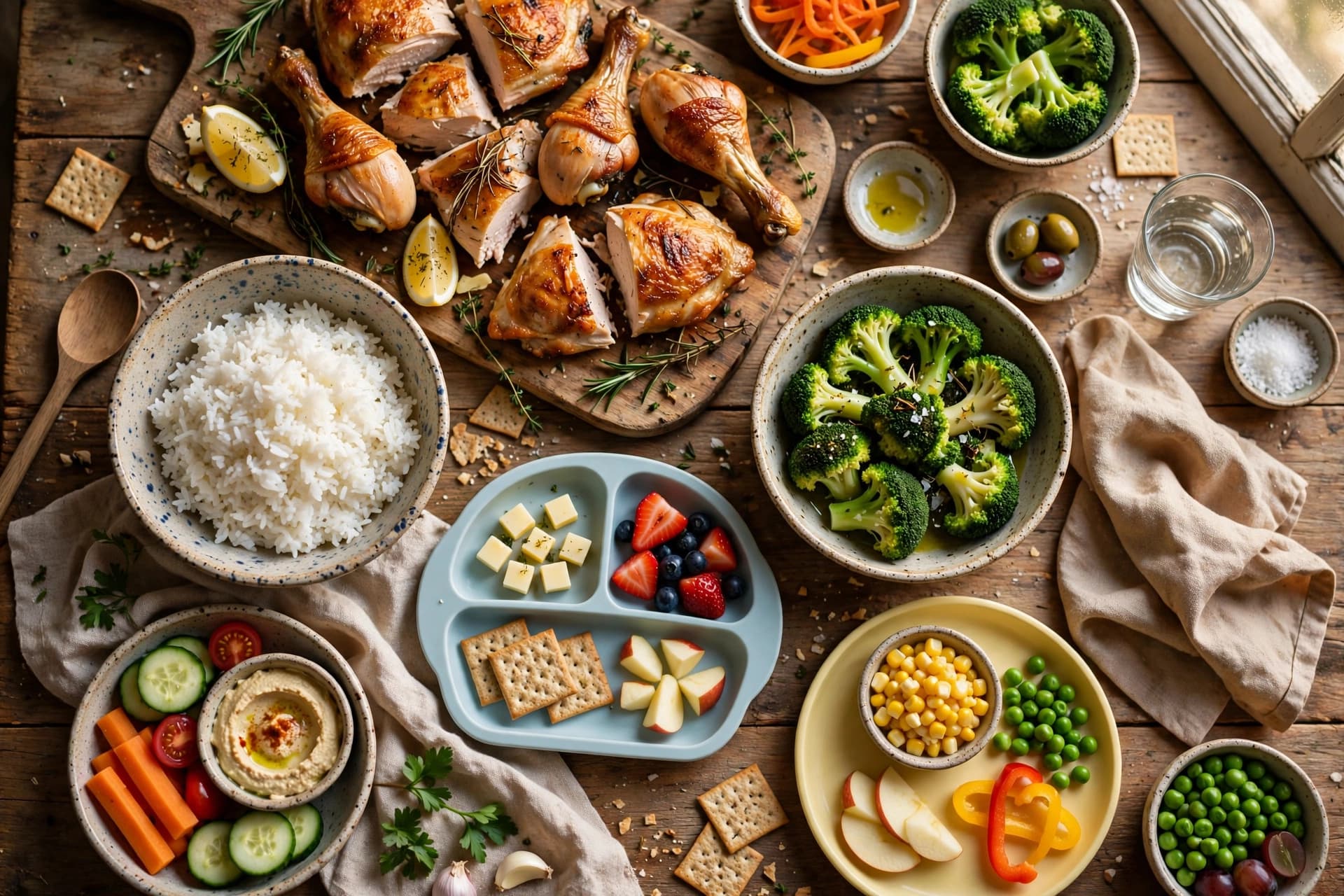
Family meal plans are weekly schedules of what your household will eat for breakfast, lunch, and dinner. By deciding meals once a week, families cut daily decision-making, waste less food, and spend less on groceries — while making it easier to serve balanced dinners everyone actually eats.
TL;DR — Key takeaways
- A family meal plan is simply a weekly list of meals — decided once — so weeknights run on autopilot instead of starting with “what's for dinner?”
- Planning weekly family meals typically cuts grocery spending and food waste, because you shop from a list instead of improvising.
- Theme nights (taco Tuesday, pasta Friday) and “cook once, eat twice” recipes make kid-friendly meal planning far less repetitive.
- Deconstructed meals — one base, separate toppings — let picky eaters and adventurous eaters share the same dinner without anyone cooking twice.
- For large families, doubling batch-friendly recipes and planning around one grocery trip keeps costs and cooking time in check.
What are family meal plans?
A family meal plan is a written schedule of the meals your household will eat over the coming week. Most weekly family meal plans start with dinners, then add breakfasts, lunches, and snacks as the routine settles in. The plan turns directly into a grocery list, so you buy exactly what you need — nothing more, nothing less.
A plan is not a rigid contract. Think of it as a default you can deviate from: taco night can slide to Thursday, and a rough Tuesday can become a freezer-meal night. The value is in deciding ahead of time, not in following the schedule perfectly. Households that treat the plan as a flexible guide stick with it far longer than those chasing perfection.
Family meal planning also scales with your ambition. A beginner plan might cover only five weeknight dinners. A fuller version adds breakfasts, packed lunches, and snacks. Start with dinners — they cause most of the daily stress — and expand only when the habit feels easy.
Why does family meal planning work so well?
Family meal planning works because it moves the hardest decisions — what to eat, what to buy, when to cook — to one calm session per week. That single habit cuts weeknight stress, reduces impulse takeout, lowers grocery bills, and makes balanced eating the default instead of the exception.
- Less weeknight stress. The 5pm “what's for dinner” scramble disappears when the answer is already written down.
- Lower grocery bills. A list built from the plan replaces impulse buys, and planned portions mean less food thrown away at the end of the week.
- Better-balanced meals. It is much easier to build balanced plates when you plan calmly on Sunday than when you improvise while hungry. The USDA's MyPlate guidance — roughly half the plate fruits and vegetables, plus whole grains and lean protein — is a simple template to check each dinner against.
- Less food waste. Ingredients get assigned to specific meals, so the spinach bought for Monday's pasta actually gets used instead of wilting in the crisper.
- Calmer kids. Children eat better when meals are predictable. Knowing dinner is coming — and roughly what it will be — smooths out the hangry hour before the meal.
How do you build a weekly family meal plan?
Start by checking your calendar, inventorying what you already have, and picking five to seven dinners your family already likes. Fill in breakfasts and lunches with repeatable staples, write one grocery list from the plan, and shop once. The whole routine takes 20–30 minutes once it becomes a habit.
- Check the week ahead. Note late workdays, practices, and evenings out. Busy nights get the fastest meals — or planned leftovers.
- Inventory your kitchen. Scan the fridge, freezer, and pantry. Plan first around what needs using up; it cuts waste and shrinks the grocery list.
- Pick five to seven dinners. Lean on proven favorites before experimenting. Two new recipes a week is plenty — the rest should be meals your family already eats happily.
- Add breakfasts and lunches. Keep these boring on purpose: two or three rotating breakfasts and a lunch formula (protein + fruit + vegetable) cover the whole week with almost no thought.
- Write one grocery list. Go meal by meal, then group items by store section — produce, dairy, meat, pantry. Section-grouped lists make the store trip dramatically faster.
- Shop once. One planned trip beats three improvised ones. Buy perishables for the first half of the week first, and keep frozen vegetables as backup for later days.
- Prep one anchor on Sunday. Cook a single versatile item — a pot of rice, a tray of roasted vegetables, or a batch of shredded chicken — and weeknight assembly gets much faster.
What does a sample weekly family meal plan look like?
A realistic weekly family meal plan mixes two or three fresh dinners with reliable repeats like taco night and pasta night. Below is a 7-day dinner framework built from family dinner ideas that scale easily, suit most ages, and leave planned leftovers for lunches.
| Day | Dinner | Why it works |
|---|---|---|
| Monday | Chicken and vegetable stir-fry over rice | Fast, uses any vegetables on hand; rice doubles for later in the week |
| Tuesday | Taco night with seasoned ground turkey | Deconstructed by nature — everyone builds their own; a kid-friendly classic |
| Wednesday | Sheet-pan sausage, peppers, and potatoes | One pan, minimal cleanup; great for a busy midweek evening |
| Thursday | Pasta with marinara and hidden-vegetable sauce | Comfort food that pleases all ages; double the sauce and freeze half |
| Friday | Homemade pizza night | Kids customize their own; use store-bought dough to keep it easy |
| Saturday | Slow-cooker pulled chicken sandwiches + slaw | Hands-off cooking; leftovers become Sunday lunch |
| Sunday | Breakfast for dinner: eggs, pancakes, fruit | Cheap, fast, and universally loved; a gentle end to the week |
If you want more variety without more decisions, Mealence's collection of 300 recipes is a good place to pull fresh family dinner ideas that still fit your diet, goals, and allergies. Rotating two new recipes into the plan each week keeps things interesting while the reliable favorites do the heavy lifting.
How do you make kid-friendly meals the whole family will eat?
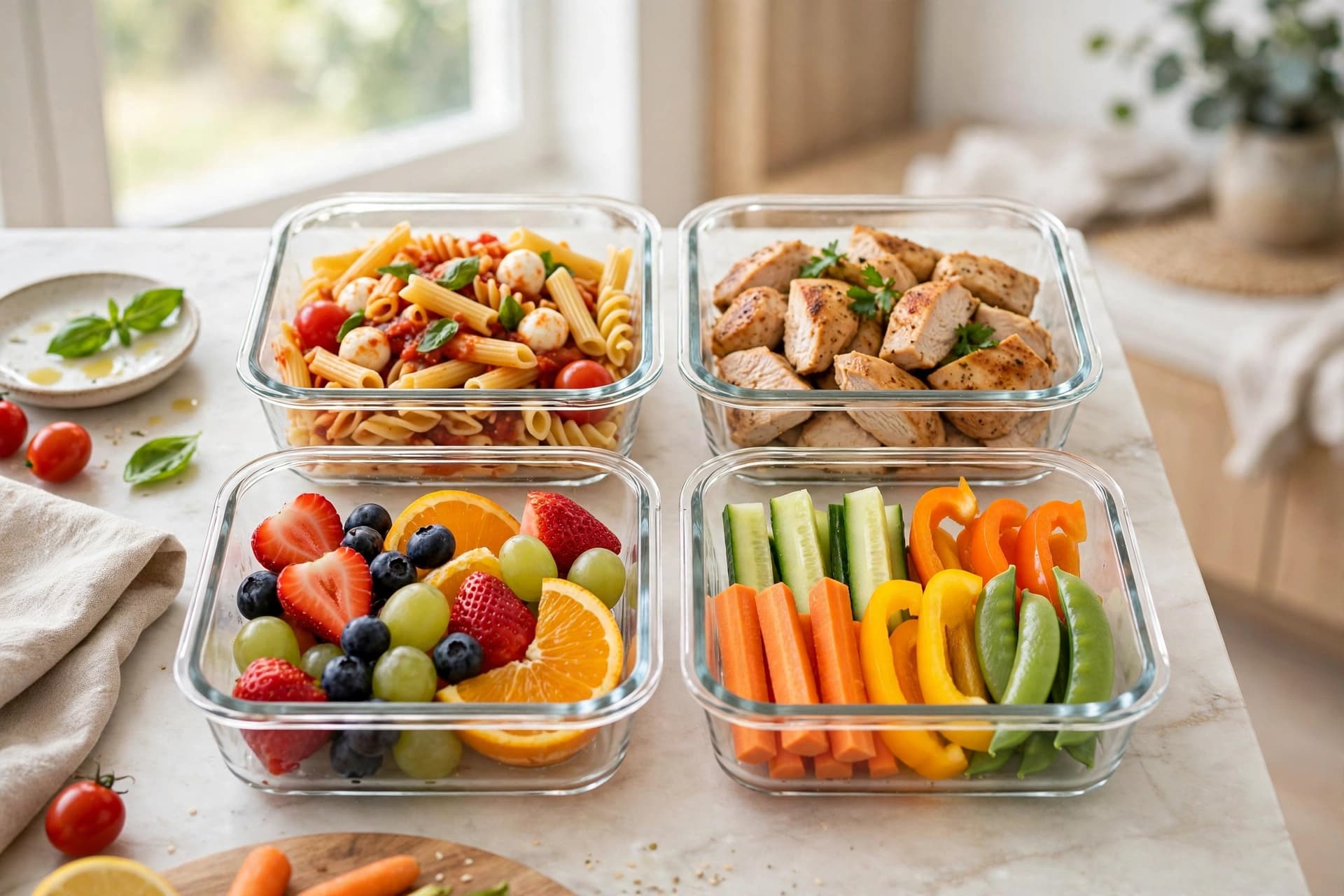
Cook one meal, not two: choose dinners with a plain base and optional toppings, like tacos, pasta, grain bowls, or baked potato bars. Kids get the familiar version while adults add the extras. This “deconstructed” approach ends the short-order-cook cycle while everyone eats the same core ingredients.
Kid-friendly meal planning is less about special “kid food” and more about presentation and control. A few strategies that consistently work:
- Deconstruct everything possible. Serve sauce, toppings, and mix-ins on the side. A child who rejects “casserole” may happily eat the exact same components arranged separately.
- Keep one safe food on the plate. Pair anything new with something familiar — bread, rice, or fruit. Nobody goes hungry, and new foods get low-pressure exposure.
- Let kids choose within boundaries. “Broccoli or green beans?” gives control without opening the whole menu. Kids who help choose the week's theme nights are more invested in eating them.
- Involve them in prep. Washing vegetables, tearing lettuce, or stirring batter turns dinner into an activity — and kids reliably taste what they helped make.
- Repeat without pressure. It can take many calm exposures before a child accepts a new food. Keep serving it in small amounts alongside favorites, and skip the clean-plate negotiations.
Mornings benefit from the same thinking: our breakfast meal prep ideas for busy families cover overnight oats and egg muffins that kids can grab themselves.
How does meal planning for large families work?
Meal planning for large families follows the same steps with bigger math: choose recipes that double well, plan around bulk proteins and pantry staples, and schedule one big grocery trip. Batch-friendly meals like sheet-pan dinners, soups, and casseroles feed a crowd without multiplying your cooking time.
- Double everything batch-friendly. Soups, stews, chili, pasta sauce, and casseroles scale almost for free. Cook double, eat one batch, freeze one for a future week.
- Anchor the week on bulk proteins. Whole chickens, large packs of thighs, ground meat, and eggs stretch across multiple meals at a lower cost per serving.
- Use the oven, not the stovetop. Sheet-pan and one-pot meals scale to feed six or eight far more easily than recipes needing multiple skillets.
- Assign roles. Large families have built-in prep crews. Even young kids can wash produce or set the table, which genuinely shortens the dinner rush.
- Plan a monthly freezer session. One bigger cooking day a month — doubled recipes frozen in portions — gives future weeks a head start and smooths out the busiest stretches.
Which family meal planning approach is right for you?
The best approach is the one you will actually repeat. Pen-and-paper lists are free and flexible, spreadsheets organize bigger households, and a dedicated planner like Mealence builds the week around your diet, goals, and allergies. Here is how they compare:
| Approach | Cost | Weekly time | Best for | Watch out for |
|---|---|---|---|---|
| Pen and paper | Free | 30–45 min | Getting started; simple households | Lists get lost; no recipe storage |
| Spreadsheet | Free | 30–45 min | Large families; planners who love templates | Manual upkeep; easy to abandon |
| Mealence | Free account and preference setup | Preferences once; plans weekly | Households with diets, goals, or allergies to juggle | Weekly plan generation is in final rollout — set up now to be ready |
How do you grocery shop for a family meal plan?
Shop from the list your plan produced — grouped by store section — and buy perishables for the first half of the week first. One planned trip beats three improvised ones: it cuts impulse buys, keeps produce from wilting, and makes the plan you wrote the food you actually eat.
- Check the pantry before you list. Half of most “forgotten” grocery spending is rebuying what was already home.
- Group the list by section. Produce, dairy, meat, frozen, pantry — in store order. You will shop faster and forget less.
- Front-load fresh produce. Plan delicate greens and berries for Monday–Wednesday; use hardy vegetables, frozen options, and pantry staples later in the week.
- Keep a running “buy next time” list. A note on the fridge or phone captures the empty peanut butter the moment you notice it, so it lands on next week's list automatically.
- Shop alone when you can. Extra shoppers add extra items. Solo trips with a list are consistently cheaper — bring kids along occasionally so they learn the routine, not every time.
Family meal planning FAQs
How many dinners should a weekly family meal plan include?
Plan five or six dinners and leave one or two nights flexible. Flex nights absorb leftovers, takeout, or dinner at a relative's house without wrecking the plan. A plan that survives real life beats a perfect plan nobody follows.
What if my family is tired of the plan by Wednesday?
Build in a swap rule: any dinner can trade nights with any other, no guilt. Keep one or two backup freezer meals — a frozen lasagna, soup, or stir-fry kit — for weeks when cooking feels impossible. Flexibility is what keeps family meal planning sustainable.
How do I meal plan with a picky eater?
Use deconstructed meals with a plain base and separate toppings, like tacos, pasta, grain bowls, or baked potato bars. Serve one unfamiliar food alongside familiar favorites, keep portions small, and avoid turning dinner into a negotiation. Most kids need many low-pressure exposures before they accept a new food.
How much money can family meal planning save on groceries?
Savings vary by household, but they come from three reliable sources: fewer impulse purchases, less food thrown away, and fewer last-minute takeout orders. Shopping from a list written before you enter the store is the single biggest lever.
Can I do family meal planning if I don't cook every night?
Absolutely. A good weekly family meal plan can include rotisserie chicken nights, freezer meals, breakfast-for-dinner, and planned takeout. Planning is about deciding ahead of time — not about cooking from scratch daily.
How long does weekly family meal planning take?
The first week takes 45–60 minutes as you gather favorite recipes and learn the routine. After that, most households finish planning and list-making in 20–30 minutes, especially if they reuse a rotation of proven family dinner ideas.
Should I include snacks and school lunches in the plan?
Yes, at least loosely. Add a snack column with two or three repeatable options per week, and use a lunch formula — protein plus fruit plus vegetable plus a fun extra — so school lunches pack themselves. Planned snacks also cut the after-school grazing that spoils dinner.
Start with dinners, and keep it flexible
You do not need a perfect system to benefit from family meal plans — you need five dinners written down before Sunday night. Start there, add breakfasts and lunches when the habit feels easy, and let the plan bend around real life. Within a month, the 5pm scramble fades, the grocery bill steadies, and dinner becomes the calmest part of the day instead of the most chaotic.
For more ideas, browse the Mealence blog — including our high protein meal prep guide for active households. This article is for informational purposes and is not medical advice. Consult a qualified professional for personalized guidance.
Take the weekly planning off your plate
Mealence builds personalized weekly meal plans around your diet, goals, and allergies — so family meal planning stops being a Sunday chore. Create your free account and set your preferences today.
Try Mealence's personalized weekly meal planner